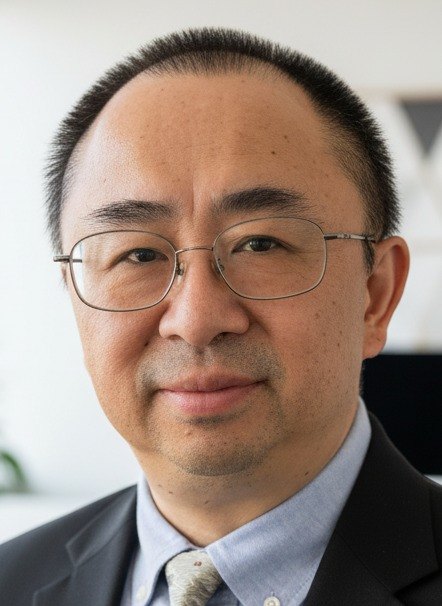
 | Professor Yu Chen
Professor at Binghamton University, Researcher on AIGC Authentication, FSPIE
Binghamton, New York, United States
Senior Member of IEEE
ychen@binghamton.edu
linkedin.com/in/yu-chen-binghamton
Short biography
Dr. Yu Chen is a Professor of Electrical and Computer Engineering at Binghamton University, State University of New York, and Director of the Intelligent and Sustainable Edge Computing (I-SEC) Lab. He is a Fellow of SPIE and a Senior Member of the IEEE and the ACM. He received his Ph.D. in Electrical Engineering from the University of Southern California (USC) in 2006. His research focuses on trust, security, and privacy in edge-fog-cloud computing, the Internet of Things (IoT), environmental fingerprinting, deepfake detection, blockchain, and smart cities. A unifying theme of his work is physical grounding for AI trust, anchoring digital intelligence to verifiable physical-world evidence. He has published more than 300 papers and led roughly $10 million in sponsored research. He has been listed among Stanford's top 2% most-cited scientists every year since 2021.
Speech Title: Trustworthy Edge Intelligence for Wearable and Medical IoT: Security, Privacy, and Resilience
Abstract: Wearable and medical IoT devices increasingly sense, infer, and act on health-critical signals at the network edge. For monitoring older adults living alone, such systems must do two things at once: recognize emergencies fast enough to matter, and prove that the data driving those decisions is real. This keynote argues that statistical validation alone is not enough, and that trust in health AI must be anchored in physics. The first thread is real-time human action recognition for elder safety. Our RESAM system fuses skeleton, wearable-inertial, depth, and visual signals on Raspberry-Pi-class hardware, tuned to a clinically motivated false-negative rate of about 1.2%, because a missed fall is far more dangerous than a false alarm. The second thread is environmental authentication. Our SAVE framework uses the electric network frequency (ENF) signature of the patient's environment to verify that sensor data originates from the real physical world, defeating device spoofing, deepfake data injection, and replay attacks that slip past conventional biometrics. Together they form a secure digital-twin "Microverse" for remote care, with sub-200-millisecond latency. This talk will close with open challenges in privacy-preserving on-device learning and resilience under adversarial pressure.
|
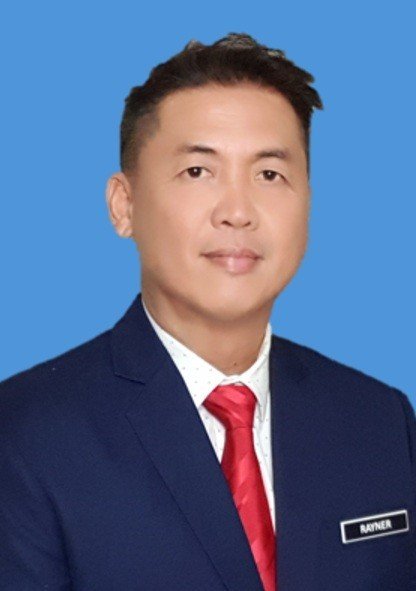 | Professor Ts Dr Rayner Alfred
Assistant Vice Chancellor (Industry and Community Network)
Chief Executive Officer, Malaysia AI Centre of Excellence (MaiCoE) Professor of Computer Science, Faculty of Computing and Informatics, Universiti Malaysia Sabah https://www.linkedin.com/in/rayneralfred
IEEE member
Short biography
Professor Ts. Dr. Rayner Alfred, ADK is a Professor of Computer Science (Artificial Intelligence) at Universiti Malaysia Sabah (UMS), where he also serves as Assistant Vice Chancellor (Industry and Community Engagements). He is the Director of the Malaysia AI Centre of Excellence (MaiCoE Sdn. Bhd.) and an Independent Non-Executive Director (INED) of Payments Network Malaysia (PayNet), under Bank Negara Malaysia (BNM). With over 25 years of experience in artificial intelligence, machine learning, data mining, and knowledge discovery, he has led numerous high-impact research, innovation, and industry collaboration initiatives. His work focuses on developing trustworthy AI solutions for healthcare, environmental sustainability, smart agriculture, aquaculture, finance, and public services. Professor Rayner has published extensively in leading international journals and has successfully supervised numerous postgraduate researchers. His contributions have earned prestigious recognitions, including the Member of the Order of Kinabalu (ADK) 2026, inclusion among the Top 5% World Scientists (SCIRANK Global Registry 2026), the Stanford–Elsevier Top 2% World Scientists 2025, and the Outstanding Researcher Award 2025 from Universiti Malaysia Sabah.
Speech Title: The New Gold Rush: Mining Global Knowledge with AI and Data Fusion
Abstract: The unprecedented growth of heterogeneous data, including structured databases, semi-structured logs, and unstructured sources such as text, images, audio, videos, and sensor streams, has created a new frontier for knowledge discovery. While conventional analytics excel at processing structured data, they often fail to capture the rich semantic relationships embedded within unstructured information. This talk presents a unified framework for mining global knowledge by integrating structured and unstructured data through Artificial Intelligence (AI), multimodal learning, and data fusion techniques. The presentation explores how feature-level (early), decision-level (late), and hybrid attention-based fusion strategies enable AI systems to combine complementary data modalities into coherent, context-aware representations. By leveraging recent advances in deep learning, representation learning, large language models, and Retrieval-Augmented Generation (RAG), these systems move beyond prediction to provide explainable, adaptive, and knowledge-driven decision support. Real-world case studies from agriculture, healthcare, finance, and environmental sustainability illustrate how multimodal fusion improves predictive performance, robustness, interpretability, and responsible AI governance. Central to the talk is a five-layer cognitive architecture comprising the Data Universe, Data Integration and Fusion, Knowledge Representation, AI Reasoning and Learning, and Knowledge-Intensive Decision layers. This framework demonstrates how diverse data sources can be transformed into actionable knowledge that supports both quantitative analysis and qualitative reasoning, enabling AI to answer not onlywhat is happening but alsowhy it occurs andwhat actions should follow. The talk concludes by positioning world knowledge mining as the next evolution of intelligent decision systems. By fusing data, knowledge, and reasoning within a unified AI ecosystem, organizations can unlock hidden insights, strengthen trust and transparency, and accelerate innovation across scientific, industrial, and societal domains. This emerging paradigm represents the new gold rush, where the true value lies not in data alone, but in the knowledge extracted to drive sustainable and intelligent decision horizons.
|
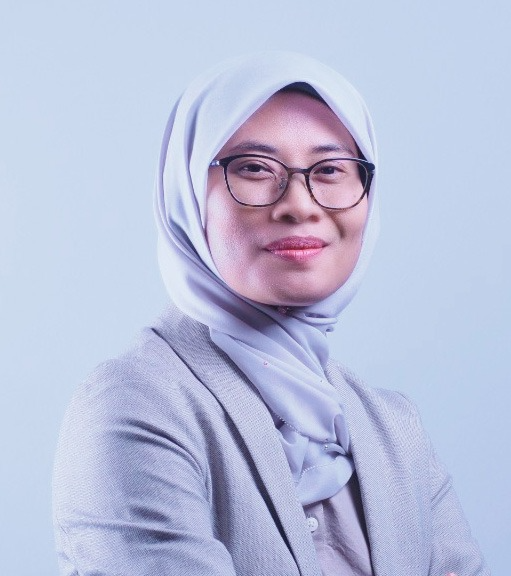 | Associate Professor Ts. Dr Aslina BaharumThe Design School, Faculty of Innovation and Technology
Taylor's University, Selangor, Malaysia
Senior Member of IEEE
aslina.baharum@taylors.edu.my
https://www.linkedin.com/in/aslina-baharum/
Short biography
Ts. Dr. Aslina holds the position of Associate Professor in The Design School, Faculty of Innovation & Technology at Taylor’s University. Previously, she has served as Associate Professor at the Department of Data Science and Artificial Intelligence, School of Computing and Artificial Intelligence, Faculty of Engineering and Technology, Sunway University and Senior Lecturer at the Faculty of Computer and Mathematical Sciences in Universiti Teknologi MARA (UiTM), and as a Senior Lecturer at the Faculty of Computing and Informatics in Universiti Malaysia Sabah (UMS), where she led the User Experience (UX) research group. Completing her academic journey, she also brings valuable industry experience as a former Information Technology (IT) Officer at the Forest Research Institute of Malaysia (FRIM). She had more than 20 years of experience in the IT field.
Speech Title: From Monitoring to Meaning: Transforming Wearable Data into Human Health Intelligence
Abstract: The rapid proliferation of wearable intelligent devices has transformed healthcare from episodic clinical encounters to continuous, real-time health monitoring. Smartwatches, fitness trackers, biosensors, and Internet of Medical Things (IoMT) technologies are generating unprecedented volumes of physiological and behavioral data, offering new opportunities for personalized, preventive, and predictive healthcare. However, despite significant advances in sensing and data collection capabilities, a critical challenge remains: how can we transform abundant health data into meaningful human health intelligence that supports informed decision-making, positive behavioral change, and improved health outcomes? This keynote explores the evolving role of wearable technologies beyond monitoring functions toward becoming intelligent health partners that empower individuals, healthcare professionals, and communities. Drawing from perspectives in Human-Computer Interaction (HCI), Human Factors, Artificial Intelligence, and User Experience Design, the presentation examines how wearable data can be translated into actionable insights that are understandable, context-aware, and relevant to users’ real-world needs. The keynote highlights emerging trends in AI-driven health analytics, digital biomarkers, adaptive health interventions, and personalized health ecosystems that move beyond data visualization to support proactive healthcare management. The session also discusses key challenges surrounding data interpretation, user engagement, information overload, accessibility, and the integration of wearable intelligence into everyday healthcare practices. Emphasis is placed on the need for interdisciplinary collaboration to ensure that future wearable technologies are not only technologically advanced but also meaningful, inclusive, and capable of supporting human well-being. As healthcare continues to shift toward prevention, personalization, and continuous care, the future lies not in collecting more data, but in transforming data into knowledge, knowledge into action, and action into better health. This keynote presents a vision for the next generation of smart healthcare, where wearable intelligence enables individuals to become active participants in managing their health and well-being.
|